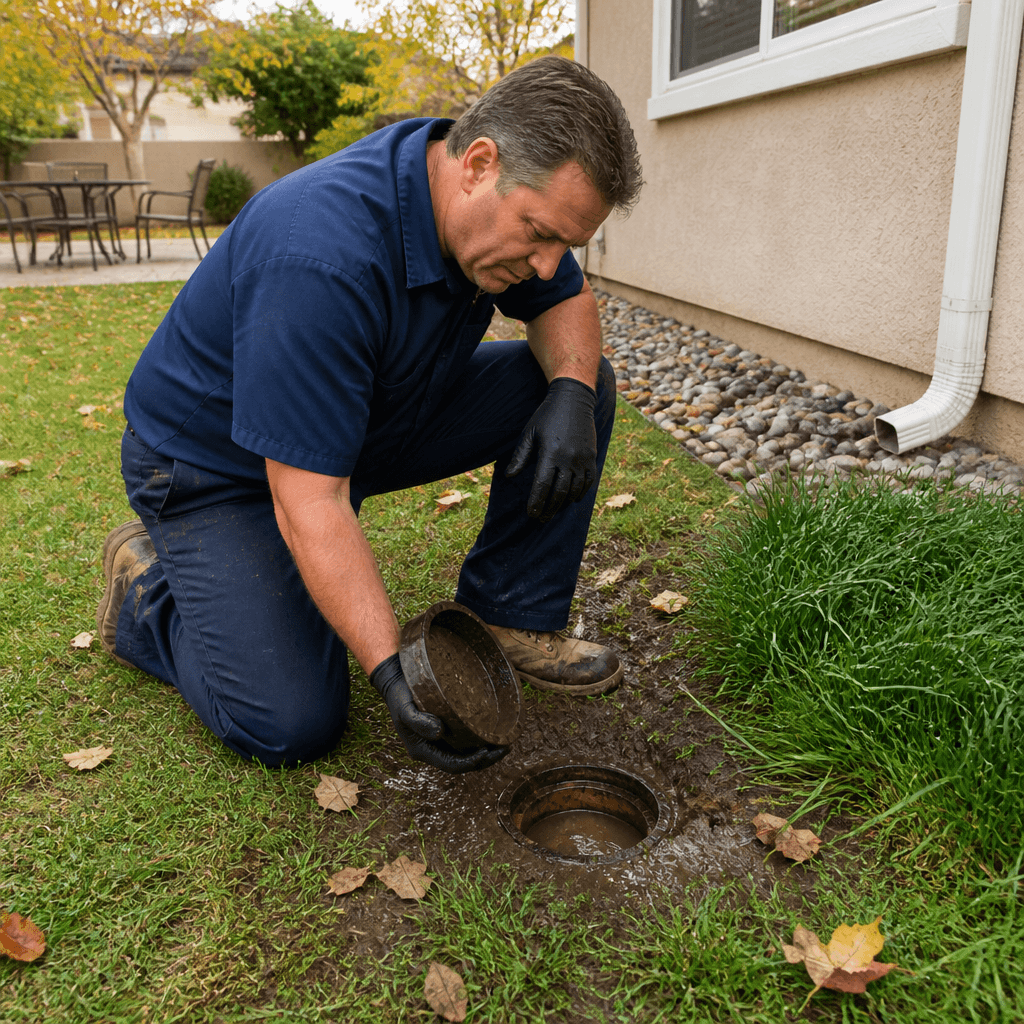
• Sewer line problems often show up as slow drains, repeated backups, bad odors, or wet spots in the yard. Catching these signs early can help prevent bigger damage and costly repairs.
• In Irvine, aging pipes, shifting soil, and tree roots can make sewer line issues worse over time. When several fixtures act up at once, the problem may be in the main sewer line rather than a single drain.
• If the same plumbing issues keep coming back, it may be time to consider repair or replacement. This guide explains what to look for, common mistakes to avoid, and when to act fast.
Why Sewer Line Warning Signs Matter
When a sewer line starts to fail, the warning signs usually show up in the home first. Slow drains, bad smells, and soggy spots in the yard can all point to a bigger problem below the surface. If those clues are ignored, the damage can spread fast and turn a repair into a major mess. For help with sewer concerns, our sewer line services can give you a clear next step.
In Irvine, older pipes, shifting ground, and heavy use can all put stress on a sewer line. That means small changes in how your plumbing works should never be brushed aside. When we help homeowners look at signs your sewer line needs replacement, we focus on the clues that show the pipe may be beyond simple cleaning or patching. Acting early can help protect the home and keep daily routines on track.
A sewer line problem often gets worse before it gets better, especially if tree roots, cracks, or buildup are involved. You may notice toilets backing up, drains gurgling, or water draining more slowly than usual. These issues do not always mean the pipe must be replaced right away, but they do mean the line needs attention soon. The sooner the issue is checked, the better the chance of avoiding a bigger repair later.
How We Check for Sewer Line Failure
We start by looking at the pattern of the problem, not just one symptom. If several drains in the home act up at the same time, that often points to a main line issue instead of a clog in one fixture. We also pay attention to whether the problem keeps coming back after basic cleaning or plunging. That kind of repeat trouble is one of the clearest signs your sewer line needs replacement.
Next, we look for outside clues that can support what is happening indoors. Wet patches in the yard, sinking soil, or sewer odors near the property can all suggest a damaged line underground. In many cases, the pipe may be cracked, collapsed, or invaded by roots, which makes normal drain service less effective. Once the line is failing at that level, replacement may be the most practical fix.
Step-by-Step Guide
🔍 Step 1: Watch for Repeat Drain Trouble
Check whether more than one drain is slowing down at the same time. When the kitchen sink, shower, and toilet all act up together, the issue may be deeper than a simple clog. This pattern is one of the first clues that the main sewer line may be involved.
👃 Step 2: Notice Any Strong Odors
Pay attention to sewer smells coming from drains, the yard, or around the home. A broken or failing sewer line can let gas escape and create a bad odor where it should not be. Tracking where the smell appears can help narrow down the source of the problem.
🚽 Step 3: Test Toilets and Fixtures
Flush toilets and run sinks to see how they respond. If water backs up, bubbles, or drains slowly in several places, the line may not be moving waste the way it should. This step helps show whether the issue is isolated or part of a larger sewer problem.
🌱 Step 4: Check the Yard for Wet Spots
Walk around the home and look for soggy soil, extra green patches, or sunken areas. These can happen when wastewater leaks underground and soaks into the soil. Yard changes are important because sewer lines often run below the surface where damage is easy to miss.
🪠 Step 5: Rule Out a Simple Clog
Make sure the issue is not just a nearby blockage in one drain. A single slow sink or shower can often be cleared with routine cleaning, but a main line issue affects the whole system. If the same symptoms keep returning, the problem may be structural rather than temporary.
🛠️ Step 6: Inspect for Pipe Damage
Look for signs of cracking, root intrusion, or pipe collapse if a sewer camera or professional inspection is used. These problems can stop waste from moving through the line and often lead to repeated backups. Once the pipe is badly damaged, replacement is usually more reliable than repeated patching.
📋 Step 7: Document the Symptoms
Write down what you notice, when it happens, and which fixtures are affected. This makes it easier to spot a pattern and explain the issue clearly when the line is checked. Good notes can also help show whether the problem is getting worse over time.
📞 Step 8: Act Before the Damage Spreads
Do not wait if the warning signs keep coming back. Sewer line problems can lead to property damage, health concerns, and higher repair costs if they are ignored. Taking quick action gives you a better chance of limiting the mess and choosing the right fix.
Common Mistakes to Avoid
Many homeowners try to handle sewer problems as if they are just ordinary drain clogs. That usually happens because the first sign looks small, like a slow sink or a weak flush. The safest way to avoid this mistake is to look at the full pattern of symptoms instead of focusing on only one fixture.
- ⚠️ Mistake 1: Treating Every Backup Like a Small Clog
A slow drain in one room may be minor, but backups in several places point to a larger issue. People often make this mistake because the early signs look simple and easy to ignore. To prevent it, check whether multiple fixtures are affected before assuming it is just a local blockage. - ⚠️ Mistake 2: Ignoring Sewer Smells
Bad odors are often the first sign that waste is not moving properly through the line. This happens because homeowners get used to the smell or think it will fade on its own. To prevent it, pay attention to where the odor is strongest and do not wait if it keeps coming back. - ⚠️ Mistake 3: Overlooking Yard Changes
Wet soil, sinking spots, and extra green patches can be easy to miss or dismiss as watering issues. People often skip this step because the problem is outside and not as obvious as a clogged sink. To prevent it, walk the property and check for changes near the path of the sewer line. - ⚠️ Mistake 4: Repeating the Same Fix Over and Over
Clearing the same drain again and again may hide a failing main line. This happens because temporary fixes can seem to work for a short time, which gives a false sense of relief. To prevent it, notice whether the issue keeps returning after each attempt to clear it. - ⚠️ Mistake 5: Waiting Until the Backup Becomes Severe
Many people delay action until wastewater starts coming up inside the home. That usually happens because the earlier warning signs feel manageable. To prevent it, treat recurring problems as a sign to get the line checked before the damage grows.
Frequently Asked Questions
What are the most common signs your sewer line needs replacement?
Yes, the most common signs your sewer line needs replacement include repeated backups, slow drains in several fixtures, foul odors, and wet spots in the yard. These warning signs often mean the line has damage that cleaning alone will not fix. If the symptoms keep returning, the sewer line should be checked soon.
Can a sewer line be repaired instead of replaced?
Yes, a sewer line can sometimes be repaired if the damage is limited and the pipe is still mostly sound. Small cracks, partial blockages, or isolated issues may not require a full replacement. If the pipe is collapsed, badly cracked, or heavily invaded by roots, replacement is usually the better choice.
Why do multiple drains backing up point to a sewer line problem?
Yes, multiple drains backing up often point to a sewer line problem because the main line connects the whole home. When that line is blocked or damaged, waste cannot move out the way it should. A single slow drain is often local, but several affected fixtures usually mean something bigger is happening.
Are sewer line problems common in older homes in Irvine?
Yes, sewer line problems can be more common in older homes in Irvine because aging pipes wear down over time. Ground movement, root growth, and long-term use can add stress to the line. That is why recurring plumbing issues should never be ignored in an older property.
How do we know if sewer odors mean the line is failing?
Yes, sewer odors can mean the line is failing, especially if the smell keeps coming back or spreads around the home and yard. A strong odor often means gas or waste is escaping somewhere in the system. When that happens along with slow drains or backups, the sewer line needs prompt attention.
Wrapping Up
When we spot signs your sewer line needs replacement, it is always better to act sooner rather than later. Small problems can turn into messy backups, yard damage, and costly repairs if they are left alone. By watching for drain issues, odors, and changes in the yard, we can catch trouble before it spreads.
If the same warning signs keep showing up, the line may be telling us it is time for a bigger fix. A careful check can help us decide whether cleaning, repair, or replacement makes the most sense. For more updates and helpful home service tips, follow us on Facebook.