• Spot the warning signs early: Learn how uneven temperatures, weak airflow, strange noises, and extra dust can point to ductwork problems before they get worse.
• Follow a simple check process: Use a clear step-by-step method to inspect vents, compare airflow, notice odors, and decide when a professional should take a look.
• Avoid costly DIY mistakes: Find out which common errors homeowners make when checking ductwork and how to avoid them for better comfort and efficiency.
Why Ductwork Problems Matter
When airflow starts to feel uneven, your home can go from comfortable to frustrating fast. That is often when signs your ductwork needs repair begin to show up in small but easy-to-miss ways. In Cypress, cooler fall weather can make weak airflow and hidden leaks more noticeable as your system works harder. If you have already noticed something off, our HVAC services can help you get ahead of bigger trouble.
A damaged duct system can waste heated air before it ever reaches your rooms. That means longer run times, uneven temperatures, and more stress on your equipment. Dusty vents, strange noises, and weak airflow are all clues that deserve attention. The sooner we look into the issue, the easier it is to keep your home comfortable through the season.
Many homeowners wait because the problem seems small at first. In reality, duct issues often grow slowly and become more expensive to deal with later. A few simple warning signs can point to leaks, loose connections, or damaged sections. Knowing what to look for helps us catch the problem before it affects the whole home.
What We Look For In Duct Repairs
The first thing we check is whether air is reaching each room the way it should. If some rooms feel fine while others stay stuffy or cold, the ducts may be leaking or blocked. We also listen for rattling, whistling, or banging sounds that can point to loose parts inside the system. These issues may seem minor, but they often lead to real comfort problems over time.
We also pay attention to dust buildup and rising energy use, since both can point to air escaping where it should not. A system with damaged ducts has to work harder to do the same job, which can affect both comfort and efficiency. When we inspect the system, we look at joints, connections, and visible runs for wear or gaps. That helps us find the source instead of just treating the symptoms.
How To Check Ductwork
🔍 Step 1: Check Room Comfort
Walk through your home and notice which rooms feel different from the others. Uneven temperatures are often one of the earliest signs your ductwork needs repair because air may be escaping before it reaches certain areas.
🌬️ Step 2: Test Airflow at Vents
Hold your hand near several vents and compare the strength of the airflow. Weak airflow in one or more rooms can point to leaks, blockage, or disconnected duct sections.
👂 Step 3: Listen for Unusual Noises
Turn the system on and listen for whistling, rattling, or banging sounds. These noises can happen when air moves through loose, damaged, or poorly sealed ductwork.
🧹 Step 4: Look for Dust Around Registers
Check vents, returns, and nearby surfaces for extra dust buildup. Excess dust can mean the system is pulling in particles through leaks or gaps in the ductwork.
💡 Step 5: Review Your Energy Use
Compare recent utility bills to what you normally pay during the same season. If your system is running longer than usual, damaged ducts may be making it work harder than needed.
🛠️ Step 6: Inspect Visible Duct Sections
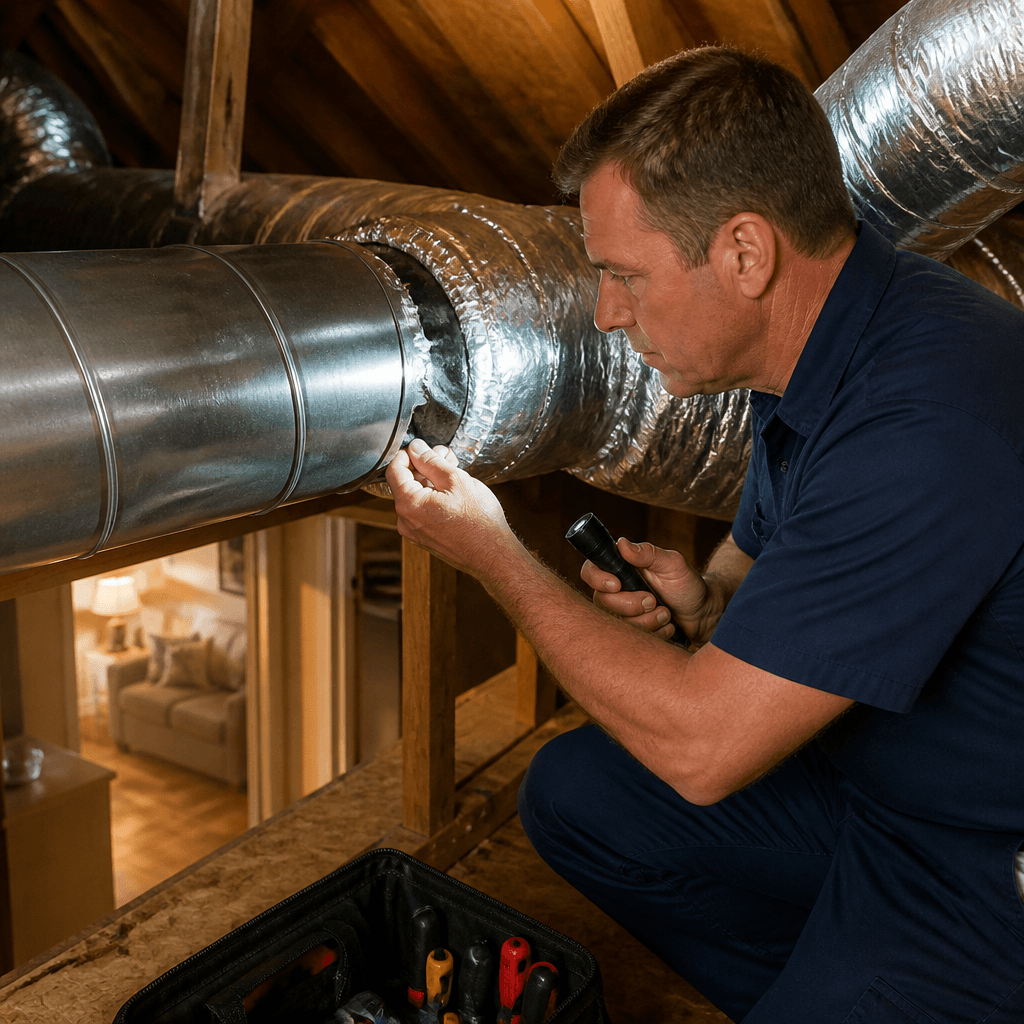
Look at any exposed ductwork in attics, closets, or utility areas. Gaps, disconnected joints, torn insulation, and damaged tape can all signal that repair is needed.
📋 Step 7: Note Odors or Musty Smells
Pay attention to any odd smells when the system starts running. Musty odors can point to moisture problems, dirt buildup, or air moving through damaged duct sections.
🔧 Step 8: Get a Professional Evaluation
If you notice more than one warning sign, a trained HVAC technician should inspect the system. A proper check can confirm whether the problem is a small seal issue, a loose connection, or a larger repair need.
Common DIY Mistakes To Avoid
Trying to fix ductwork without a clear plan can lead to more problems than it solves. Many homeowners focus on the most visible issue and miss the real cause hidden deeper in the system. These mistakes often happen because the signs seem simple, but duct systems can be tricky to judge without experience.
The good news is that most of these errors can be avoided with a careful step-by-step approach. When we know what to look for, it becomes much easier to spot the difference between a small issue and a larger repair need. Here are the most common mistakes to avoid.
⚠️ Mistake 1: Ignoring Small Comfort Changes
Some people assume one warm room or one weak vent is no big deal. That usually happens because the change feels minor at first, but it can point to a growing duct problem. To prevent this, treat any uneven temperature pattern as a sign that needs attention.
❌ Mistake 2: Only Checking One Vent
It is easy to test just one room and assume the whole system is fine. This happens because people want a quick answer, but duct issues can affect different areas in different ways. Prevent this by checking airflow in several rooms and comparing what you find.
🚫 Mistake 3: Overlooking Strange Noises
Rattling or whistling sounds are often brushed off as normal system noise. That usually happens when homeowners are used to the sound and do not realize it may point to loose or damaged ductwork. To avoid this, listen carefully every time the system starts and make note of changes.
⚠️ Mistake 4: Focusing Only On Dust
Dust around vents may get attention, but it is not the only clue that matters. This mistake happens when people clean the visible area and stop there, even though air leaks may still be present. Prevent it by checking airflow, noise, and room comfort along with the dust.
🚫 Mistake 5: Waiting Too Long To Get Help
Many homeowners wait until the system feels seriously off before taking action. That often happens because duct issues can seem small at first, but delays can make the problem spread. The best way to prevent this is to act early once several warning signs show up.
Frequently Asked Questions
What are the first signs your ductwork needs repair?
Yes, uneven room temperatures are often one of the first signs your ductwork needs repair. Weak airflow, strange noises, and extra dust around vents can also point to a problem. If these issues show up together, the ducts should be checked soon.
Can damaged ductwork raise energy bills?
Yes, damaged ductwork can make your energy bills go up. When air leaks out before reaching your rooms, your system has to run longer to keep the home comfortable. That extra work uses more energy and puts more strain on the equipment.
Why is one room colder or warmer than the others?
Yes, duct problems are a common reason one room feels different from the rest of the house. Air may be leaking, blocked, or not reaching that area as it should. This is one of the clearest signs your ductwork needs repair.
Can I inspect ductwork myself?
Yes, you can look for visible warning signs like loose connections, dust buildup, and weak airflow. However, hidden leaks and deeper damage are often harder to spot without training. A careful visual check is a good first step, but it may not tell the full story.
How often should ductwork be checked?
Yes, ductwork should be checked whenever airflow changes, comfort drops, or odd noises appear. It is also smart to look it over during seasonal changes when the system starts working harder. Regular attention helps catch small issues before they affect the whole home.
Wrap-Up: Keep Airflow Working Right
Catching duct issues early can make a big difference in comfort, air movement, and system strain. When we pay attention to the signs your ductwork needs repair, we can fix problems before they spread through the home. In Cypress, that matters even more when fall weather makes your HVAC system work harder to keep rooms steady.
If your home is showing uneven temperatures, weak airflow, or odd noises, it is worth taking a closer look now. A prompt check can help protect your comfort and keep the system running the way it should. To stay connected with our team, follow us on social media.