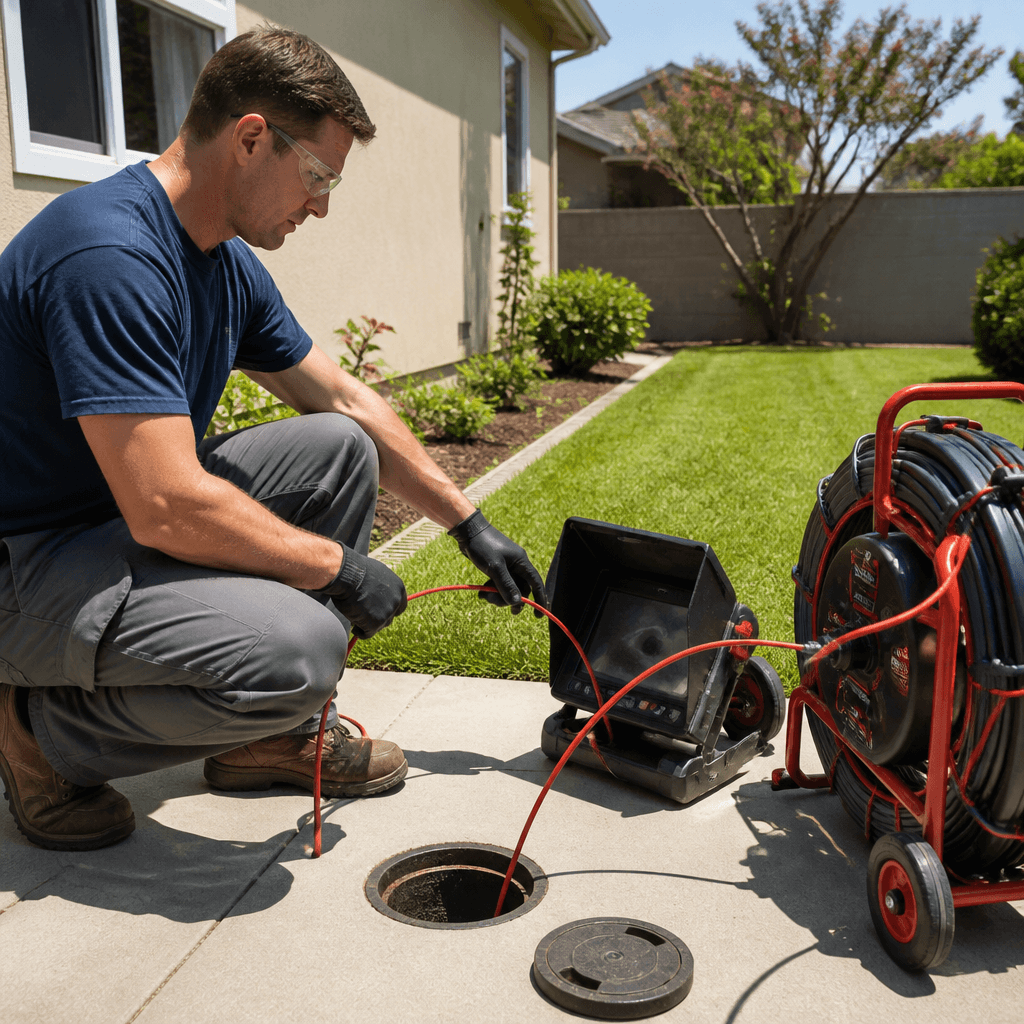
• Sewer line issues often start with small warning signs like slow drains, bad smells, or repeated clogs, and summer water use can make those problems show up faster in Los Alamitos homes.
• The sewer line inspection process explained in this blog shows how a camera inspection can reveal blockages, cracks, root growth, and other hidden damage before the line backs up.
• Practical tips and common questions help homeowners know when to act, what to watch for, and why early sewer checks can protect both the home and the plumbing system.
Why Sewer Checks Matter Before Trouble Starts
In summer, sewer problems can show up fast when homes in Los Alamitos are using more water and drains are working harder. A small backup can turn into a messy day if the line already has cracks, clogs, or root growth. That is why the sewer line inspection process explained in simple terms matters before the warning signs get worse. When we catch a problem early, we can help protect your home and keep your plumbing moving the way it should.
Many sewer issues start quietly, so the first clue is not always a full backup. You may notice slow drains, repeated clogs, or bad smells around sinks and tubs before the line fails. If those signs are showing up, it may be time to take a closer look at our sewer line services before the problem spreads. In warm weather, hidden line issues can become more noticeable because homes are often using plumbing more often.
A sewer inspection gives us a clear picture of what is happening underground. We use the right tools to look inside the pipe, find the trouble spot, and decide what needs to happen next. The sewer line inspection process explained in a simple way helps homeowners understand why a drain issue is not always just a drain issue. When you know what is going on early, you can make better choices for your home and your budget.
What We Look For During an Inspection
The first thing we check is whether the line is blocked or damaged. A camera inspection lets us see buildup, breaks, or other problems that may be hiding deep in the pipe. We also look for signs that water is backing up where it should not. That helps us figure out whether the issue is local or coming from the main sewer line.
We also pay attention to changes in the pipe shape and condition. Older lines can shift over time, and tree roots can find their way into small openings. That is why a sewer line inspection process explained by a trained plumber can save time compared with guessing at the cause. In many cases, the pipe tells us the story if we know how to read it.
Tips from the Pros
🔎 Tip 1: Watch for slow drains in more than one room
If one sink is slow, the issue may be local. If several drains are moving slowly at the same time, the sewer line may be the real problem. That is a sign to take a closer look before the backup gets worse.
📋 Tip 2: Note bad smells around drains and tubs
Strong sewer odors often point to a blockage or venting problem. These smells should not be ignored, especially if they keep coming back after cleaning. In many homes, odor is one of the first clues that the sewer line needs attention.
🌳 Tip 3: Keep an eye on tree-heavy areas
Roots often seek out small openings in underground pipes. Homes with mature landscaping may face more sewer line trouble over time. If your yard has large trees, a camera check can help spot hidden damage early.
🚿 Tip 4: Pay attention after heavy water use
If showers, laundry, and dishwashing start causing gurgling or backups, the line may already be strained. Extra water use can reveal a weak spot that has been there for a while. Summer routines often make these signs easier to notice.
🛠️ Tip 5: Do not rely on repeated drain cleaning alone
If clogs keep coming back, the problem may be deeper than the fixture. A drain can clear for a short time while the sewer line stays damaged or blocked. That is why repeated clogs deserve a proper inspection.
📷 Tip 6: Ask about a camera inspection when symptoms return
A camera can show buildup, cracks, offsets, and other issues inside the line. This gives a clearer answer than guesswork or temporary fixes. It is one of the best ways to understand what the pipe needs next.
🏠 Tip 7: Check for wet spots or sinkholes in the yard
Unusual soft spots in the lawn can point to a leaking underground line. These areas may form when wastewater escapes and changes the soil below. When you see that kind of change, it is smart to act quickly.
⏱️ Tip 8: Schedule service at the first warning sign
Waiting can turn a small issue into a bigger repair. The sooner the sewer line is inspected, the easier it is to plan the right fix. Early action can help protect both the home and the plumbing system.
Frequently Asked Questions
What is the sewer line inspection process explained in simple terms?
Yes, it is a step-by-step check of the underground sewer pipe using the right tools, often including a camera. We look for blockages, cracks, root intrusion, and other damage that can affect drainage. The goal is to find the problem before it becomes a bigger backup.
How do I know if I need a sewer inspection?
Yes, repeated clogs, slow drains, foul smells, or gurgling sounds can all point to a sewer problem. If more than one drain is acting up, the issue may be beyond a single fixture. A sewer inspection helps confirm what is causing the trouble.
Can a sewer camera find hidden pipe damage?
Yes, a sewer camera can often show cracks, buildup, corrosion, and root intrusion inside the line. It gives us a clear view without digging up the yard right away. That makes it a helpful tool for finding the real cause of drainage issues.
How long does a sewer inspection usually take?
Yes, many sewer inspections can be completed in a short visit, depending on access and pipe condition. The exact time depends on how easy it is to reach the line and what the inspection reveals. A clear view of the pipe helps us move faster with next steps.
Why is summer a good time to check sewer lines in Los Alamitos?
Yes, summer is often a smart time because homes may use more water and drainage problems can show up more clearly. Warm weather also makes it easier to notice odors, slow drains, and yard changes linked to sewer issues. In Los Alamitos, that can help homeowners catch problems before they grow.
Final Thoughts for Homeowners
A sewer problem rarely gets better on its own, and early signs are often the most useful ones. By understanding the sewer line inspection process explained here, homeowners can act sooner and avoid more stress later. We are always ready to help you make sense of what your plumbing is telling you.
If you notice slow drains, bad smells, or other warning signs in your Los Alamitos home, do not wait for the backup to spread. A careful inspection can point us toward the right solution and help protect your property. For more updates from our team, follow us on social media.