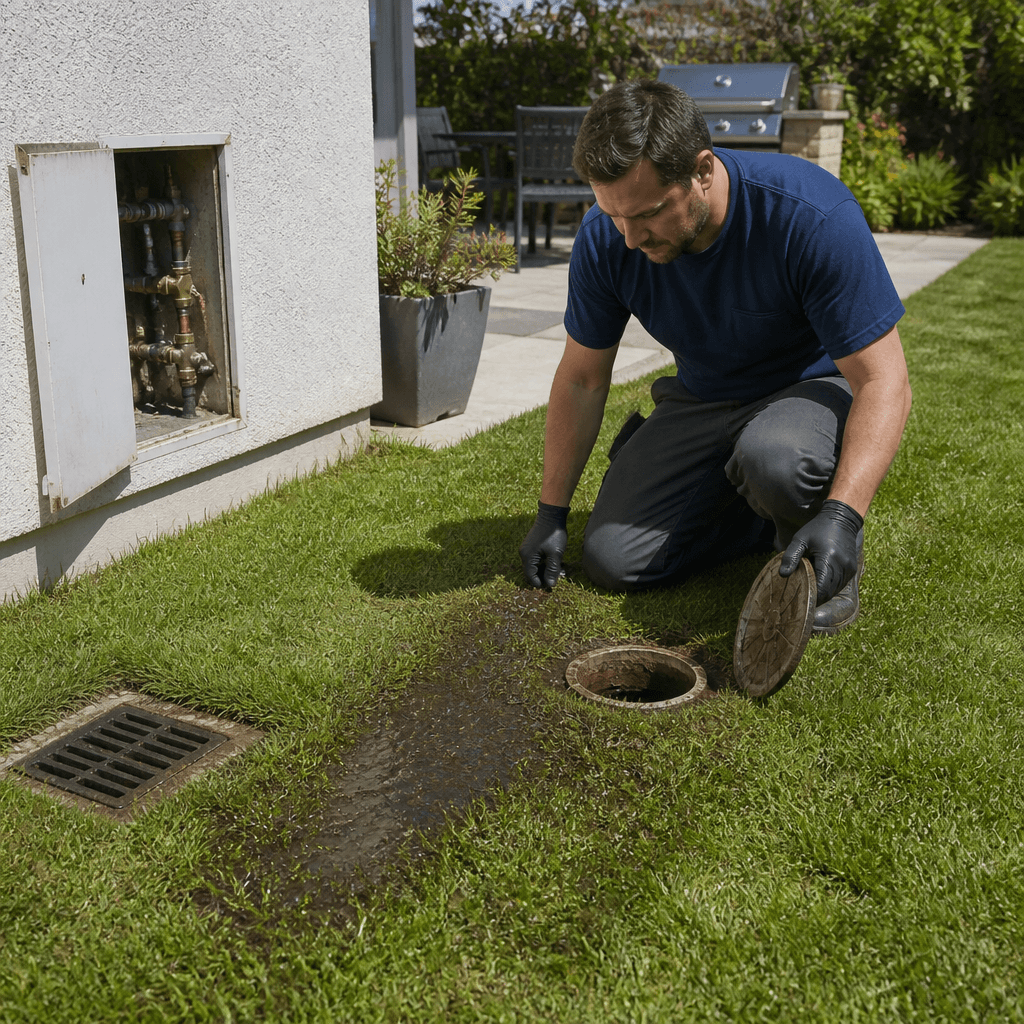
• Spot the early warning signs: Slow drains, sewer odors, gurgling toilets, and wet yard spots can all point to a sewer line issue before a full backup starts. Catching these clues early can help prevent bigger damage.
• Know when it is more than a clog: If several drains are acting up at once or the same backup keeps returning, the problem may be deeper in the main sewer line. That is why repeated issues should not be ignored.
• Act fast to protect your home: Waiting too long can lead to wastewater damage, foul smells, and costly repairs. A quick check can help you get ahead of the problem and keep your plumbing working properly.
When Sewer Problems Start Showing Up
When a sewer line starts to fail, the signs often show up in small ways first. Slow drains, bad smells, and wet spots in the yard can all point to a bigger issue below the surface. In Dana Point, summer heat can make these problems feel even more urgent because odors and drainage issues can become harder to ignore.
That is why it helps to pay attention early and act before the damage spreads. A small backup today can turn into a messy repair job if the line keeps breaking down. When homeowners notice trouble fast, they have a better chance of protecting their plumbing and their property.
We often see people wait because the water still flows, just more slowly than before. But sewer problems do not usually fix themselves, and the warning signs tend to get worse with time. If you are already noticing changes, our sewer line services can help you get answers before the issue grows.
How Sewer Line Warning Signs Add Up
A single symptom does not always mean the sewer line is failing, but several signs together usually tell a clearer story. Repeated clogs, gurgling drains, and sewage smells can mean there is a blockage, break, or root intrusion in the line. When these problems keep coming back, the issue is often deeper than a simple drain clog.
The best way to think about sewer line repair signs to watch for is to look for patterns instead of one-off problems. If multiple fixtures are draining slowly at the same time, the main line may be struggling to move waste away from the home. In many cases, homeowners first notice the issue in the bathroom or kitchen before the yard or foundation area shows visible trouble.
Step-by-Step Guide to Spot Sewer Line Trouble
🔍 Step 1: Check for Slow Drains
Look at sinks, tubs, and showers to see whether water drains slower than normal. When several fixtures slow down at once, that often points to a main line problem rather than a single clog.
👃 Step 2: Notice Any Sewer Odors
Pay attention to strong smells near drains, around the yard, or close to cleanout points. Sewer gas should not be present in living areas, so a persistent odor can be a clear warning sign.
💧 Step 3: Look for Wet or Soggy Spots Outside
Walk the yard and check for patches that stay damp without a clear reason. A damaged sewer line can leak underground and make the soil above it look greener or wetter than the surrounding area.
🚽 Step 4: Watch Toilet Behavior
Flush each toilet and see if the water rises, bubbles, or drains unevenly. These changes can happen when the sewer line is partially blocked and air is trapped in the system.
🛠️ Step 5: Listen for Gurgling Sounds
Run water in a sink or tub and listen for strange sounds in nearby drains. Gurgling often means air and water are not moving through the pipes the way they should.
📋 Step 6: Check for Repeated Backups
If the same drain keeps backing up after being cleared, the real problem may be farther down the line. Repeated backups are one of the most common sewer line repair signs to watch for because they usually point to a larger blockage or damage.
🧱 Step 7: Inspect for Foundation or Floor Moisture
Look for damp areas along slabs, walls, or floors near plumbing fixtures. Moisture in these spots can mean wastewater is escaping from a damaged section of pipe.
📞 Step 8: Get the Line Evaluated Quickly
If several warning signs are present, the safest move is to have the sewer line checked right away. Fast action can help limit property damage and keep a small issue from becoming a much bigger repair.
Mistakes Homeowners Make With Sewer Line Issues
Many homeowners try to handle sewer concerns as if they were a simple clog. That can lead to missed warning signs and bigger repairs later. The safest approach is to look at the whole system and not just the most obvious drain.
Some mistakes happen because the early symptoms seem minor at first. Others happen because people hope the problem will clear on its own. Knowing what not to do can save time, stress, and damage to the home.
- ⚠️ Mistake 1: Treating Every Backup Like a Small Clog
This happens when people assume one drain is the only issue and keep clearing it again and again. If backups keep coming back, the real problem may be in the main sewer line, so the fix needs to address the source. - ❌ Mistake 2: Ignoring Sewer Smells
Some homeowners get used to odors and stop paying attention to them. Sewer smells often mean gas or waste is escaping where it should not, and that should be checked before the issue spreads. - 🚫 Mistake 3: Overlooking Outside Warning Signs
Wet grass, sink spots, or oddly green patches are easy to miss if no one looks around the yard. These signs matter because underground leaks often show up outside before they become obvious indoors. - ⚠️ Mistake 4: Waiting Until Multiple Fixtures Fail
People often wait because one sink or toilet still works well enough. By the time several fixtures are affected, the sewer line problem is usually more advanced and harder to manage. - ❌ Mistake 5: Skipping a Full System Check
This mistake happens when homeowners focus only on the loudest symptom and ignore the rest of the home. A full check helps connect the clues, which makes it easier to understand whether the issue is in the drain, the line, or somewhere else.
Frequently Asked Questions
What are the first sewer line repair signs to watch for?
Yes, the first signs often include slow drains, gurgling sounds, and sewer odors. These symptoms usually show up before a full backup happens, which gives homeowners time to act early.
Can one slow drain mean a sewer line problem?
Yes, but it does not always point to the sewer line by itself. If more than one fixture is draining slowly, that is a stronger sign that the main line may be affected.
Why does my yard smell like sewage?
Yes, a sewage smell in the yard can mean waste gas or water is leaking from a buried pipe. This should be checked quickly because underground sewer damage often gets worse over time.
Are repeated clogs a sign of sewer line damage?
Yes, repeated clogs can be one of the clearest sewer line repair signs to watch for. If the same drain keeps clogging after being cleared, the issue may be deeper in the system.
When should I call a plumber for sewer line issues?
Yes, you should call a plumber when several warning signs show up at the same time or when backups keep returning. Early help can reduce damage and make the repair process easier to manage.
Know the Signs Before They Turn Into Bigger Problems
Sewer line issues usually give warning signs before they become severe, especially when you know what to look for. Slow drains, odors, outside moisture, and repeated backups are all clues that should not be ignored. In Dana Point, summer conditions can make those signs feel more noticeable, so it pays to stay alert.
The sooner the problem is identified, the easier it is to protect your home and avoid more disruption. We recommend acting quickly when the symptoms start to stack up because sewer damage rarely stays small for long. For more updates and helpful tips, follow us on social media.